Buy daydreamvillas.eu ?
We are moving the project
daydreamvillas.eu .
Are you interested in purchasing the domain
daydreamvillas.eu ?
domain@kv-gmbh.de · 0541-91531010
Buy daydreamvillas.eu ?
What is the sine rule and what is its special property?
The sine rule, also known as the law of sines, is a trigonometric rule that relates the sides of a triangle to the sines of its angles. It states that in any triangle, the ratio of the length of a side to the sine of its opposite angle is constant. This can be expressed as: a/sin(A) = b/sin(B) = c/sin(C), where a, b, and c are the lengths of the sides, and A, B, and C are the measures of the angles. The special property of the sine rule is that it can be used to solve for unknown sides and angles in a triangle, making it a useful tool in trigonometry and geometry. **
Is it worth having a vacation rental property?
Having a vacation rental property can be worth it for some people, as it can provide a source of passive income and potential tax benefits. Additionally, it can offer the flexibility to use the property for personal vacations when it's not being rented out. However, it also comes with responsibilities such as property management, maintenance, and dealing with guests. It's important to carefully consider the costs, time commitment, and potential risks before investing in a vacation rental property. **


Similar search terms for Sine
Top-Angebote
Products related to Sine:
-
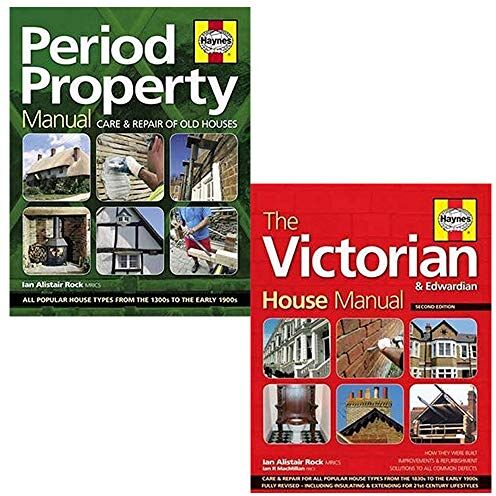
J H Haynes & Co Ltd Haynes Property Manual 2 Books Collection Set (The Victorian House, Period Property)The Victorian House Manual The Victorian House Manual (2nd Edition): How They Were Built, Improvements & Refurbishment, Solutions to All Common Defects Thinking of buying a Victorian or Edwardian house? Or maybe you already own one? Either way, this clearly written manual explains all you need to know about the care and repair of these classic properties. Today, many houses of this age are in need of extensive updating and maintenance, having suffered years of neglect. Some have been damaged by misguided home improvements or botched repairs using the wrong materials. Even newly refurbished properties can sometimes conceal dangerous structural alterations and shoddy build-quality. This unique manual provides detailed, expert advice, backed up with clear how to colour photographs, describing where to check for the critical danger signs and how to fix all common defects. Period Property Britain has a wonderfully rich stock of period houses - everything from medieval cottages to Georgian townhouses and Edwardian mansions. But many of these historic properties are now at risk. Some are unwittingly damaged by well-meaning owners or incompetent builders; others suffer long-term deterioration where mortgage lenders have imposed quick-fix 'remedies'. Despite being some of the most sustainable buildings on the planet, many old houses are now being subjected to ill-advised works to upgrade thermal efficiency, resulting in the destruction of the very qualities that make them so appealing, slashing their values. Haynes have come to the rescue with this clearly written, lavishly illustrated manual explaining the correct approach to care and repair - covering the full range of traditional materials. Every old house has a story to tell, so Haynes also show how to explore your home's history and strip back modern finishes to reveal long lost original features. This comprehensive manual is essential reading whether you want to get your hands dirty or just want to understand how old houses work and how to go about employing specialist craftsmen.19,99 £*Shipping: 2,99 £Secure redirect to the provider
-
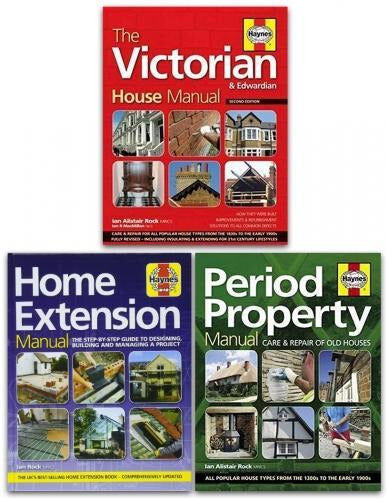
J H Haynes & Co Ltd Haynes Property Manual 3 Books Collection Set Home Extension The Victorian House Period PropertyTitles In this Set: The Victorian House Manual Home Extension Period Property The Victorian House Manual The Victorian House Manual (2nd Edition): How They Were Built, Improvements & Refurbishment, Solutions to All Common Defects Thinking of buying a Victorian or Edwardian house? Or maybe you already own one? Either way, this clearly written manual explains all you need to know about the care and repair of these classic properties. Today, many houses of this age are in need of extensive updating and maintenance, having suffered years of neglect. Some have been damaged by misguided home improvements or botched repairs using the wrong materials. Even newly refurbished properties can sometimes conceal dangerous structural alterations and shoddy build-quality. This unique manual provides detailed, expert advice, backed up with clear how to colour photographs, describing where to check for the critical danger signs and how to fix all common defects. Home ExtensionMany people are looking at ways to extend their homes rather than move house, but `getting the builders in' can be a recipe for disaster unless you really know what you are doing. Whether you plan to employ a building contractor or tackle some of the works yourself, this best-selling manual will show you how to stay firmly in control, resulting in a high-quality extension, completed on time and within budget. This new edition will include all the up-do-date information on complying with the latest Building Regs and Planning requirements, CAD design, energy-efficiency, under floor heating, bi-folds, liquid screeds, woodburning stoves and renewable energy. Period Property Britain has a wonderfully rich stock of period houses - everything from medieval cottages to Georgian townhouses and Edwardian mansions. But many of these historic properties are now at risk. Some are unwittingly damaged by well-meaning owners or incompetent builders; others suffer long-term deterioration where mortgage lenders have imposed quick-fix 'remedies'. Despite being some of the most sustainable buildings on the planet, many old houses are now being subjected to ill-advised works to upgrade thermal efficiency, resulting in the destruction of the very qualities that make them so appealing, slashing their values. Haynes have come to the rescue with this clearly written, lavishly illustrated manual explaining the correct approach to care and repair - covering the full range of traditional materials. Every old house has a story to tell, so Haynes also show how to explore your home's history and strip back modern finishes to reveal long lost original features. This comprehensive manual is essential reading whether you want to get your hands dirty or just want to understand how old houses work and how to go about employing specialist craftsmen.24,99 £*Shipping: 2,99 £Secure redirect to the provider
-
NARS Sparked Liquid Eyeshadow liquid glitter eyeshadow shade HOT PROPERTY 3.5 mlNARS Sparked Liquid Eyeshadow, 3.5 ml, Eyeshadows for Women, Do you tend to hit the same few shades in your favourite eyeshadow palette but you just can’t do without them? Or are you travelling and can only fit the essentials in your toiletry bag? Thanks to its compact size, the NARS Sparked Liquid Eyeshadow eyeshadow won’t take up much room, so you can always have it on hand, be it by itself in your purse or as an accessory to your favourite palette. This allows you to give your lids a pop of colour or define the shape of your eyes to your liking, giving every makeup look a new dimension, no matter what your reason for getting them is. The formula ensures even pigment coverage, easy application and seamless blending without unwanted harsh transitions. Characteristics: long-lasting do not smudge in the crease of the eyelid washes out easily sparkling effect ophthalmologically tested30,80 £*Shipping: 3,99 £Secure redirect to the provider


-
How can one calculate the sine without using the sine function?
One way to calculate the sine without using the sine function is to use the Taylor series expansion of the sine function. The Taylor series for sine is: sin(x) = x - (x^3/3!) + (x^5/5!) - (x^7/7!) + ... By using this series, one can approximate the value of sine for a given angle by plugging in the angle into the series and summing up the terms to a desired level of precision. Another method is to use the unit circle and the properties of right-angled triangles to calculate the sine of an angle. By using the opposite and hypotenuse sides of a right-angled triangle, one can calculate the sine of the angle as the ratio of the opposite side to the hypotenuse. **
-
What are sine functions?
Sine functions are a type of trigonometric function that represent the ratio of the length of the side opposite a given angle in a right triangle to the length of the hypotenuse. In a sine function, the value of the function at a specific angle is equal to the y-coordinate of a point on the unit circle corresponding to that angle. Sine functions have a periodic nature, with a period of 2π, and are commonly used in mathematics and physics to model periodic phenomena such as sound waves and oscillations. **
-
Is the sine of alpha the same as the sine of gamma?
No, the sine of alpha is not necessarily the same as the sine of gamma. The sine function is based on the ratio of the length of the side opposite an angle to the length of the hypotenuse in a right triangle. Since alpha and gamma are different angles, they will have different ratios and therefore different sine values. **
-
How do you calculate the sine value of x in a sine function?
To calculate the sine value of x in a sine function, you can use a scientific calculator or mathematical software. Simply input the value of x into the sine function, denoted as sin(x), and the calculator or software will provide you with the corresponding sine value. Alternatively, you can use trigonometric identities or the unit circle to find the sine value of x manually. **

Why can the sine in the sine rule not be greater than 1?
The sine in the sine rule cannot be greater than 1 because the sine function has a maximum value of 1. The sine of an angle is defined as the ratio of the length of the opposite side to the length of the hypotenuse in a right-angled triangle. Since the length of the opposite side cannot be greater than the length of the hypotenuse, the sine of an angle cannot be greater than 1. This is a fundamental property of the sine function and is a result of the geometry of right-angled triangles. **
How do you determine the sine of alpha and the sine of beta?
The sine of an angle in a right-angled triangle is determined by dividing the length of the side opposite the angle by the length of the hypotenuse. So, to find the sine of alpha, you would divide the length of the side opposite alpha by the length of the hypotenuse. Similarly, to find the sine of beta, you would divide the length of the side opposite beta by the length of the hypotenuse. This can be represented by the formula: sin(alpha) = opposite/hypotenuse and sin(beta) = opposite/hypotenuse. **
Top-Angebote
Products related to Sine:
-
J H Haynes & Co Ltd Haynes Property Manual 2 Books Collection Set (The Victorian House, Period Property)The Victorian House Manual The Victorian House Manual (2nd Edition): How They Were Built, Improvements & Refurbishment, Solutions to All Common Defects Thinking of buying a Victorian or Edwardian house? Or maybe you already own one? Either way, this clearly written manual explains all you need to know about the care and repair of these classic properties. Today, many houses of this age are in need of extensive updating and maintenance, having suffered years of neglect. Some have been damaged by misguided home improvements or botched repairs using the wrong materials. Even newly refurbished properties can sometimes conceal dangerous structural alterations and shoddy build-quality. This unique manual provides detailed, expert advice, backed up with clear how to colour photographs, describing where to check for the critical danger signs and how to fix all common defects. Period Property Britain has a wonderfully rich stock of period houses - everything from medieval cottages to Georgian townhouses and Edwardian mansions. But many of these historic properties are now at risk. Some are unwittingly damaged by well-meaning owners or incompetent builders; others suffer long-term deterioration where mortgage lenders have imposed quick-fix 'remedies'. Despite being some of the most sustainable buildings on the planet, many old houses are now being subjected to ill-advised works to upgrade thermal efficiency, resulting in the destruction of the very qualities that make them so appealing, slashing their values. Haynes have come to the rescue with this clearly written, lavishly illustrated manual explaining the correct approach to care and repair - covering the full range of traditional materials. Every old house has a story to tell, so Haynes also show how to explore your home's history and strip back modern finishes to reveal long lost original features. This comprehensive manual is essential reading whether you want to get your hands dirty or just want to understand how old houses work and how to go about employing specialist craftsmen.19,99 £*Shipping: 2,99 £Secure redirect to the provider
-
J H Haynes & Co Ltd Haynes Property Manual 3 Books Collection Set Home Extension The Victorian House Period PropertyTitles In this Set: The Victorian House Manual Home Extension Period Property The Victorian House Manual The Victorian House Manual (2nd Edition): How They Were Built, Improvements & Refurbishment, Solutions to All Common Defects Thinking of buying a Victorian or Edwardian house? Or maybe you already own one? Either way, this clearly written manual explains all you need to know about the care and repair of these classic properties. Today, many houses of this age are in need of extensive updating and maintenance, having suffered years of neglect. Some have been damaged by misguided home improvements or botched repairs using the wrong materials. Even newly refurbished properties can sometimes conceal dangerous structural alterations and shoddy build-quality. This unique manual provides detailed, expert advice, backed up with clear how to colour photographs, describing where to check for the critical danger signs and how to fix all common defects. Home ExtensionMany people are looking at ways to extend their homes rather than move house, but `getting the builders in' can be a recipe for disaster unless you really know what you are doing. Whether you plan to employ a building contractor or tackle some of the works yourself, this best-selling manual will show you how to stay firmly in control, resulting in a high-quality extension, completed on time and within budget. This new edition will include all the up-do-date information on complying with the latest Building Regs and Planning requirements, CAD design, energy-efficiency, under floor heating, bi-folds, liquid screeds, woodburning stoves and renewable energy. Period Property Britain has a wonderfully rich stock of period houses - everything from medieval cottages to Georgian townhouses and Edwardian mansions. But many of these historic properties are now at risk. Some are unwittingly damaged by well-meaning owners or incompetent builders; others suffer long-term deterioration where mortgage lenders have imposed quick-fix 'remedies'. Despite being some of the most sustainable buildings on the planet, many old houses are now being subjected to ill-advised works to upgrade thermal efficiency, resulting in the destruction of the very qualities that make them so appealing, slashing their values. Haynes have come to the rescue with this clearly written, lavishly illustrated manual explaining the correct approach to care and repair - covering the full range of traditional materials. Every old house has a story to tell, so Haynes also show how to explore your home's history and strip back modern finishes to reveal long lost original features. This comprehensive manual is essential reading whether you want to get your hands dirty or just want to understand how old houses work and how to go about employing specialist craftsmen.24,99 £*Shipping: 2,99 £Secure redirect to the provider
-
What is the sine rule and what is its special property?
The sine rule, also known as the law of sines, is a trigonometric rule that relates the sides of a triangle to the sines of its angles. It states that in any triangle, the ratio of the length of a side to the sine of its opposite angle is constant. This can be expressed as: a/sin(A) = b/sin(B) = c/sin(C), where a, b, and c are the lengths of the sides, and A, B, and C are the measures of the angles. The special property of the sine rule is that it can be used to solve for unknown sides and angles in a triangle, making it a useful tool in trigonometry and geometry. **
-
Is it worth having a vacation rental property?
Having a vacation rental property can be worth it for some people, as it can provide a source of passive income and potential tax benefits. Additionally, it can offer the flexibility to use the property for personal vacations when it's not being rented out. However, it also comes with responsibilities such as property management, maintenance, and dealing with guests. It's important to carefully consider the costs, time commitment, and potential risks before investing in a vacation rental property. **
-
How can one calculate the sine without using the sine function?
One way to calculate the sine without using the sine function is to use the Taylor series expansion of the sine function. The Taylor series for sine is: sin(x) = x - (x^3/3!) + (x^5/5!) - (x^7/7!) + ... By using this series, one can approximate the value of sine for a given angle by plugging in the angle into the series and summing up the terms to a desired level of precision. Another method is to use the unit circle and the properties of right-angled triangles to calculate the sine of an angle. By using the opposite and hypotenuse sides of a right-angled triangle, one can calculate the sine of the angle as the ratio of the opposite side to the hypotenuse. **
-
What are sine functions?
Sine functions are a type of trigonometric function that represent the ratio of the length of the side opposite a given angle in a right triangle to the length of the hypotenuse. In a sine function, the value of the function at a specific angle is equal to the y-coordinate of a point on the unit circle corresponding to that angle. Sine functions have a periodic nature, with a period of 2π, and are commonly used in mathematics and physics to model periodic phenomena such as sound waves and oscillations. **
Similar search terms for Sine
-
NARS Sparked Liquid Eyeshadow liquid glitter eyeshadow shade HOT PROPERTY 3.5 mlNARS Sparked Liquid Eyeshadow, 3.5 ml, Eyeshadows for Women, Do you tend to hit the same few shades in your favourite eyeshadow palette but you just can’t do without them? Or are you travelling and can only fit the essentials in your toiletry bag? Thanks to its compact size, the NARS Sparked Liquid Eyeshadow eyeshadow won’t take up much room, so you can always have it on hand, be it by itself in your purse or as an accessory to your favourite palette. This allows you to give your lids a pop of colour or define the shape of your eyes to your liking, giving every makeup look a new dimension, no matter what your reason for getting them is. The formula ensures even pigment coverage, easy application and seamless blending without unwanted harsh transitions. Characteristics: long-lasting do not smudge in the crease of the eyelid washes out easily sparkling effect ophthalmologically tested30,80 £*Shipping: 3,99 £Secure redirect to the provider
-
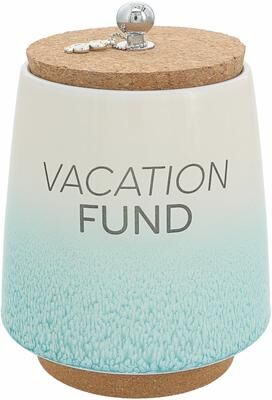
"Pavilion Vacation Fund Ceramic Savings Bank - 6.5"""Save for your next adventure in style with this charming “Vacation Fund” stoneware money jar. Featuring a glossy ombre glaze, motivational fill lines, and a removable dollar-sign keychain, it’s a fun and functional way to reach your travel goals31,99 $*Shipping: 0,00 $Secure redirect to the provider
-
SAFAVIEH Retreat Aoibheann Farmhouse RugThe Retreat Rug Collection presents versatile indoor/outdoor area rugs that effortlessly complement any living space. Delicate fringe details lend a relaxed coastal charm, while a neutral palette ensures seamless harmony with existing decor.121,49 $*Shipping: 0,00 $Secure redirect to the provider
-
Is the sine of alpha the same as the sine of gamma?
No, the sine of alpha is not necessarily the same as the sine of gamma. The sine function is based on the ratio of the length of the side opposite an angle to the length of the hypotenuse in a right triangle. Since alpha and gamma are different angles, they will have different ratios and therefore different sine values. **
-
How do you calculate the sine value of x in a sine function?
To calculate the sine value of x in a sine function, you can use a scientific calculator or mathematical software. Simply input the value of x into the sine function, denoted as sin(x), and the calculator or software will provide you with the corresponding sine value. Alternatively, you can use trigonometric identities or the unit circle to find the sine value of x manually. **
-
Why can the sine in the sine rule not be greater than 1?
The sine in the sine rule cannot be greater than 1 because the sine function has a maximum value of 1. The sine of an angle is defined as the ratio of the length of the opposite side to the length of the hypotenuse in a right-angled triangle. Since the length of the opposite side cannot be greater than the length of the hypotenuse, the sine of an angle cannot be greater than 1. This is a fundamental property of the sine function and is a result of the geometry of right-angled triangles. **
-
How do you determine the sine of alpha and the sine of beta?
The sine of an angle in a right-angled triangle is determined by dividing the length of the side opposite the angle by the length of the hypotenuse. So, to find the sine of alpha, you would divide the length of the side opposite alpha by the length of the hypotenuse. Similarly, to find the sine of beta, you would divide the length of the side opposite beta by the length of the hypotenuse. This can be represented by the formula: sin(alpha) = opposite/hypotenuse and sin(beta) = opposite/hypotenuse. **
* All prices are inclusive of VAT and, if applicable, plus shipping costs. The offer information is based on the details provided by the respective shop and is updated through automated processes. Real-time updates do not occur, so deviations can occur in individual cases. ** Note: Parts of this content were created by AI.