Buy daydreamvillas.eu ?
We are moving the project
daydreamvillas.eu .
Are you interested in purchasing the domain
daydreamvillas.eu ?
domain@kv-gmbh.de · 0541-91531010
Buy daydreamvillas.eu ?
What does NH3 mean?
NH3 is the chemical formula for ammonia, a compound made up of one nitrogen atom and three hydrogen atoms. Ammonia is a colorless gas with a pungent smell, commonly used in household cleaning products and as a fertilizer. It is also produced naturally in the environment through processes like decomposition and animal waste. **
Do NH3 and H3N behave differently?
NH3 and H3N are the same compound, ammonia. The difference in notation (NH3 vs H3N) is due to the different conventions used in chemistry. The order of the elements in the formula does not affect the behavior or properties of the compound. Ammonia is a colorless gas with a characteristic pungent odor, and it behaves the same way regardless of how it is written. **


Similar search terms for NH3
Top-Angebote
Products related to NH3:
-
NARS Sparked Liquid Eyeshadow liquid glitter eyeshadow shade HOT PROPERTY 3.5 mlNARS Sparked Liquid Eyeshadow, 3.5 ml, Eyeshadows for Women, Do you tend to hit the same few shades in your favourite eyeshadow palette but you just can’t do without them? Or are you travelling and can only fit the essentials in your toiletry bag? Thanks to its compact size, the NARS Sparked Liquid Eyeshadow eyeshadow won’t take up much room, so you can always have it on hand, be it by itself in your purse or as an accessory to your favourite palette. This allows you to give your lids a pop of colour or define the shape of your eyes to your liking, giving every makeup look a new dimension, no matter what your reason for getting them is. The formula ensures even pigment coverage, easy application and seamless blending without unwanted harsh transitions. Characteristics: long-lasting do not smudge in the crease of the eyelid washes out easily sparkling effect ophthalmologically tested30,80 £*Shipping: 3,99 £Secure redirect to the provider
-
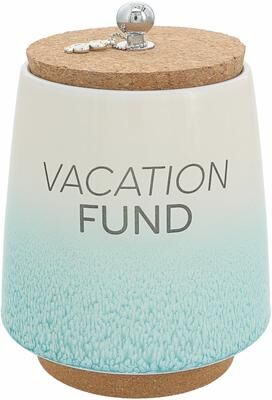
"Pavilion Vacation Fund Ceramic Savings Bank - 6.5"""Save for your next adventure in style with this charming “Vacation Fund” stoneware money jar. Featuring a glossy ombre glaze, motivational fill lines, and a removable dollar-sign keychain, it’s a fun and functional way to reach your travel goals31,99 $*Shipping: 0,00 $Secure redirect to the provider



-
How many moles does ammonia (NH3) have?
Ammonia (NH3) has one mole. This is because one mole of any substance contains approximately 6.022 x 10^23 molecules, and in the case of ammonia, one molecule of NH3 represents one mole. Therefore, one mole of ammonia contains Avogadro's number of ammonia molecules. **
-
Why can't ammonia (NH3) form hydrogen bonds?
Ammonia (NH3) cannot form hydrogen bonds because it does not contain a hydrogen atom bonded to a highly electronegative atom such as fluorine, oxygen, or nitrogen. In order for a molecule to form hydrogen bonds, it must have a hydrogen atom bonded to a highly electronegative atom, and ammonia does not meet this criteria. Instead, ammonia forms weaker dipole-dipole interactions due to the difference in electronegativity between the nitrogen and hydrogen atoms. **
-
Why is the ammonia molecule NH3 a dipole?
The ammonia molecule NH3 is a dipole because it has a trigonal pyramidal shape with a lone pair of electrons on the nitrogen atom. This lone pair creates an uneven distribution of charge within the molecule, with the nitrogen atom carrying a partial negative charge and the hydrogen atoms carrying partial positive charges. As a result, the molecule has a net dipole moment, with the nitrogen end being more negative and the hydrogen end being more positive. This makes ammonia a polar molecule. **
-
Is the production of NH3 endothermic or exothermic?
The production of NH3 is exothermic. This means that the reaction releases heat as it proceeds. The formation of NH3 from its constituent elements, nitrogen and hydrogen, releases energy in the form of heat. This is why the Haber process, which is used to produce NH3 on an industrial scale, operates at high temperatures to favor the exothermic reaction. **


Why is NH3 a base and NH4 an acid?
NH3 is a base because it can accept a proton (H+) from an acid to form NH4+. NH4+ is an acid because it can donate a proton to a base to form NH3. In the Bronsted-Lowry theory of acids and bases, a base is a substance that can accept a proton, while an acid is a substance that can donate a proton. **
Why does HCl react with NH3 as an acid?
HCl reacts with NH3 as an acid because HCl is a strong acid that can donate a proton (H+) to NH3, which is a weak base. This reaction forms the ammonium ion (NH4+) and chloride ion (Cl-) through the transfer of a proton from HCl to NH3. The reaction occurs to reach a state of equilibrium where the acid and base neutralize each other, resulting in the formation of a salt. **
Top-Angebote
Products related to NH3:
-
J H Haynes & Co Ltd Haynes Property Manual 2 Books Collection Set (The Victorian House, Period Property)The Victorian House Manual The Victorian House Manual (2nd Edition): How They Were Built, Improvements & Refurbishment, Solutions to All Common Defects Thinking of buying a Victorian or Edwardian house? Or maybe you already own one? Either way, this clearly written manual explains all you need to know about the care and repair of these classic properties. Today, many houses of this age are in need of extensive updating and maintenance, having suffered years of neglect. Some have been damaged by misguided home improvements or botched repairs using the wrong materials. Even newly refurbished properties can sometimes conceal dangerous structural alterations and shoddy build-quality. This unique manual provides detailed, expert advice, backed up with clear how to colour photographs, describing where to check for the critical danger signs and how to fix all common defects. Period Property Britain has a wonderfully rich stock of period houses - everything from medieval cottages to Georgian townhouses and Edwardian mansions. But many of these historic properties are now at risk. Some are unwittingly damaged by well-meaning owners or incompetent builders; others suffer long-term deterioration where mortgage lenders have imposed quick-fix 'remedies'. Despite being some of the most sustainable buildings on the planet, many old houses are now being subjected to ill-advised works to upgrade thermal efficiency, resulting in the destruction of the very qualities that make them so appealing, slashing their values. Haynes have come to the rescue with this clearly written, lavishly illustrated manual explaining the correct approach to care and repair - covering the full range of traditional materials. Every old house has a story to tell, so Haynes also show how to explore your home's history and strip back modern finishes to reveal long lost original features. This comprehensive manual is essential reading whether you want to get your hands dirty or just want to understand how old houses work and how to go about employing specialist craftsmen.19,99 £*Shipping: 2,99 £Secure redirect to the provider
-
J H Haynes & Co Ltd Haynes Property Manual 3 Books Collection Set Home Extension The Victorian House Period PropertyTitles In this Set: The Victorian House Manual Home Extension Period Property The Victorian House Manual The Victorian House Manual (2nd Edition): How They Were Built, Improvements & Refurbishment, Solutions to All Common Defects Thinking of buying a Victorian or Edwardian house? Or maybe you already own one? Either way, this clearly written manual explains all you need to know about the care and repair of these classic properties. Today, many houses of this age are in need of extensive updating and maintenance, having suffered years of neglect. Some have been damaged by misguided home improvements or botched repairs using the wrong materials. Even newly refurbished properties can sometimes conceal dangerous structural alterations and shoddy build-quality. This unique manual provides detailed, expert advice, backed up with clear how to colour photographs, describing where to check for the critical danger signs and how to fix all common defects. Home ExtensionMany people are looking at ways to extend their homes rather than move house, but `getting the builders in' can be a recipe for disaster unless you really know what you are doing. Whether you plan to employ a building contractor or tackle some of the works yourself, this best-selling manual will show you how to stay firmly in control, resulting in a high-quality extension, completed on time and within budget. This new edition will include all the up-do-date information on complying with the latest Building Regs and Planning requirements, CAD design, energy-efficiency, under floor heating, bi-folds, liquid screeds, woodburning stoves and renewable energy. Period Property Britain has a wonderfully rich stock of period houses - everything from medieval cottages to Georgian townhouses and Edwardian mansions. But many of these historic properties are now at risk. Some are unwittingly damaged by well-meaning owners or incompetent builders; others suffer long-term deterioration where mortgage lenders have imposed quick-fix 'remedies'. Despite being some of the most sustainable buildings on the planet, many old houses are now being subjected to ill-advised works to upgrade thermal efficiency, resulting in the destruction of the very qualities that make them so appealing, slashing their values. Haynes have come to the rescue with this clearly written, lavishly illustrated manual explaining the correct approach to care and repair - covering the full range of traditional materials. Every old house has a story to tell, so Haynes also show how to explore your home's history and strip back modern finishes to reveal long lost original features. This comprehensive manual is essential reading whether you want to get your hands dirty or just want to understand how old houses work and how to go about employing specialist craftsmen.24,99 £*Shipping: 2,99 £Secure redirect to the provider
-
NARS Sparked Liquid Eyeshadow liquid glitter eyeshadow shade HOT PROPERTY 3.5 mlNARS Sparked Liquid Eyeshadow, 3.5 ml, Eyeshadows for Women, Do you tend to hit the same few shades in your favourite eyeshadow palette but you just can’t do without them? Or are you travelling and can only fit the essentials in your toiletry bag? Thanks to its compact size, the NARS Sparked Liquid Eyeshadow eyeshadow won’t take up much room, so you can always have it on hand, be it by itself in your purse or as an accessory to your favourite palette. This allows you to give your lids a pop of colour or define the shape of your eyes to your liking, giving every makeup look a new dimension, no matter what your reason for getting them is. The formula ensures even pigment coverage, easy application and seamless blending without unwanted harsh transitions. Characteristics: long-lasting do not smudge in the crease of the eyelid washes out easily sparkling effect ophthalmologically tested30,80 £*Shipping: 3,99 £Secure redirect to the provider
-
"Pavilion Vacation Fund Ceramic Savings Bank - 6.5"""Save for your next adventure in style with this charming “Vacation Fund” stoneware money jar. Featuring a glossy ombre glaze, motivational fill lines, and a removable dollar-sign keychain, it’s a fun and functional way to reach your travel goals31,99 $*Shipping: 0,00 $Secure redirect to the provider
-
What does NH3 mean?
NH3 is the chemical formula for ammonia, a compound made up of one nitrogen atom and three hydrogen atoms. Ammonia is a colorless gas with a pungent smell, commonly used in household cleaning products and as a fertilizer. It is also produced naturally in the environment through processes like decomposition and animal waste. **
-
Do NH3 and H3N behave differently?
NH3 and H3N are the same compound, ammonia. The difference in notation (NH3 vs H3N) is due to the different conventions used in chemistry. The order of the elements in the formula does not affect the behavior or properties of the compound. Ammonia is a colorless gas with a characteristic pungent odor, and it behaves the same way regardless of how it is written. **
-
How many moles does ammonia (NH3) have?
Ammonia (NH3) has one mole. This is because one mole of any substance contains approximately 6.022 x 10^23 molecules, and in the case of ammonia, one molecule of NH3 represents one mole. Therefore, one mole of ammonia contains Avogadro's number of ammonia molecules. **
-
Why can't ammonia (NH3) form hydrogen bonds?
Ammonia (NH3) cannot form hydrogen bonds because it does not contain a hydrogen atom bonded to a highly electronegative atom such as fluorine, oxygen, or nitrogen. In order for a molecule to form hydrogen bonds, it must have a hydrogen atom bonded to a highly electronegative atom, and ammonia does not meet this criteria. Instead, ammonia forms weaker dipole-dipole interactions due to the difference in electronegativity between the nitrogen and hydrogen atoms. **
Similar search terms for NH3
-
J H Haynes & Co Ltd Haynes Period Property Manual: Care And Repair Of Old HousesHaynes Period Property Manual: Care And Repair Of Old Houses Britain has a wonderfully rich stock of period houses - everything from medieval cottages to Georgian townhouses and Edwardian mansions. But many of these historic properties are now at risk. Some are unwittingly damaged by well-meaning owners or incompetent builders; others suffer long-term deterioration where mortgage lenders have imposed quick-fix 'remedies'. Despite being some of the most sustainable buildings on the planet; many old houses are now being subjected to ill-advised works to upgrade thermal efficiency; resulting in the destruction of the very qualities that make them so appealing; slashing their values. Haynes have come to the rescue with this clearly written; lavishly illustrated manual explaining the correct approach to care and repair - covering the full range of traditional materials.10,99 £*Shipping: 2,99 £Secure redirect to the provider
-
DKNY PURE Retreat Curtain Panel PairLend an effortlessly classic look to your home with the DKNY PURE Retreat window curtain panel pair. The linen set brings subtle texture and blocks light with the blackout lining to maintain your comfort and privacy.109,99 $*Shipping: 0,00 $Secure redirect to the provider
-
Why is the ammonia molecule NH3 a dipole?
The ammonia molecule NH3 is a dipole because it has a trigonal pyramidal shape with a lone pair of electrons on the nitrogen atom. This lone pair creates an uneven distribution of charge within the molecule, with the nitrogen atom carrying a partial negative charge and the hydrogen atoms carrying partial positive charges. As a result, the molecule has a net dipole moment, with the nitrogen end being more negative and the hydrogen end being more positive. This makes ammonia a polar molecule. **
-
Is the production of NH3 endothermic or exothermic?
The production of NH3 is exothermic. This means that the reaction releases heat as it proceeds. The formation of NH3 from its constituent elements, nitrogen and hydrogen, releases energy in the form of heat. This is why the Haber process, which is used to produce NH3 on an industrial scale, operates at high temperatures to favor the exothermic reaction. **
-
Why is NH3 a base and NH4 an acid?
NH3 is a base because it can accept a proton (H+) from an acid to form NH4+. NH4+ is an acid because it can donate a proton to a base to form NH3. In the Bronsted-Lowry theory of acids and bases, a base is a substance that can accept a proton, while an acid is a substance that can donate a proton. **
-
Why does HCl react with NH3 as an acid?
HCl reacts with NH3 as an acid because HCl is a strong acid that can donate a proton (H+) to NH3, which is a weak base. This reaction forms the ammonium ion (NH4+) and chloride ion (Cl-) through the transfer of a proton from HCl to NH3. The reaction occurs to reach a state of equilibrium where the acid and base neutralize each other, resulting in the formation of a salt. **
* All prices are inclusive of VAT and, if applicable, plus shipping costs. The offer information is based on the details provided by the respective shop and is updated through automated processes. Real-time updates do not occur, so deviations can occur in individual cases. ** Note: Parts of this content were created by AI.