Buy daydreamvillas.eu ?
We are moving the project
daydreamvillas.eu .
Are you interested in purchasing the domain
daydreamvillas.eu ?
domain@kv-gmbh.de · 0541-91531010
Buy daydreamvillas.eu ?
'Salts or molecules?'
Salts are compounds formed from the reaction of an acid and a base, while molecules are made up of atoms bonded together. Salts are ionic compounds, meaning they are made up of ions, while molecules can be either ionic or covalent compounds. Salts have a specific crystalline structure and are often soluble in water, while molecules can have a wide range of physical properties and solubilities. Overall, salts and molecules are distinct types of chemical compounds with different structures and properties. **
Which of the following molecules are dipole molecules and why?
Molecules that have a dipole moment are considered dipole molecules. A dipole moment occurs when there is an uneven distribution of electron density within a molecule, resulting in a partial positive and partial negative charge. For example, molecules like water (H2O) and ammonia (NH3) are dipole molecules because of their polar covalent bonds, which create a separation of charge within the molecule. On the other hand, molecules like carbon dioxide (CO2) and methane (CH4) are nonpolar and do not have a dipole moment because the electronegativity of the atoms cancel each other out, resulting in a symmetrical distribution of charge. **

Similar search terms for Molecules
Top-Angebote
Products related to Molecules:
-
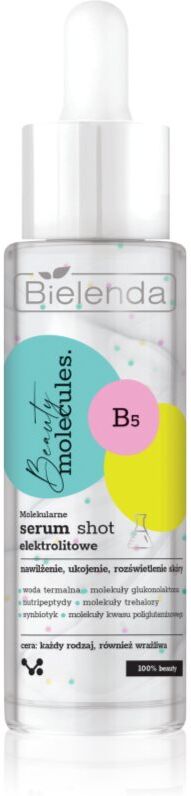
Bielenda Beauty Molecules soothing and moisturising serum 30 gBielenda Beauty Molecules, 30 g, Skin Serums for Women, Does it feel as though your skin needs something more than just the care provided by a cream? The Bielenda Beauty Molecules facial serum is the perfect product to enrich your skincare routine – it pampers the skin and delivers an intensive treatment. With its high concentration of active ingredients, the effect it has on your skin is far more pronounced and faster than with a face cream. Its liquid consistency makes application easier, as it is absorbed into the skin very well. Characteristics: hydrates and nourishes effectively brightens restores skin elasticity restores freshness and youthful beauty to your skin Ingredients: contains a minimum of 90% ingredients of natural origin How to use: Dab an appropriate amount of the serum gently into clean skin with your fingertips. Apply to the face, neck and chest.5,95 £*Shipping: 3,99 £Secure redirect to the provider
-
Escentric Molecules Escentric 01 shower gel U 200 mlEscentric Molecules Escentric 01, 200 ml, Shower products unisex, Turn your daily shower or bath into a special experience you’ll be looking forward to all day. Escentric Molecules Escentric 01 body wash will delight your senses and make your skin smell wonderful. Characteristics: washes the skin and gets rid of dirt makes skin feel comfortable enhances the intensity of the fragrance from the same line pair with the fragrance for a wonderful gift36,12 £*Shipping: 3,99 £Secure redirect to the provider
-
J H Haynes & Co Ltd Haynes Property Manual 2 Books Collection Set (The Victorian House, Period Property)The Victorian House Manual The Victorian House Manual (2nd Edition): How They Were Built, Improvements & Refurbishment, Solutions to All Common Defects Thinking of buying a Victorian or Edwardian house? Or maybe you already own one? Either way, this clearly written manual explains all you need to know about the care and repair of these classic properties. Today, many houses of this age are in need of extensive updating and maintenance, having suffered years of neglect. Some have been damaged by misguided home improvements or botched repairs using the wrong materials. Even newly refurbished properties can sometimes conceal dangerous structural alterations and shoddy build-quality. This unique manual provides detailed, expert advice, backed up with clear how to colour photographs, describing where to check for the critical danger signs and how to fix all common defects. Period Property Britain has a wonderfully rich stock of period houses - everything from medieval cottages to Georgian townhouses and Edwardian mansions. But many of these historic properties are now at risk. Some are unwittingly damaged by well-meaning owners or incompetent builders; others suffer long-term deterioration where mortgage lenders have imposed quick-fix 'remedies'. Despite being some of the most sustainable buildings on the planet, many old houses are now being subjected to ill-advised works to upgrade thermal efficiency, resulting in the destruction of the very qualities that make them so appealing, slashing their values. Haynes have come to the rescue with this clearly written, lavishly illustrated manual explaining the correct approach to care and repair - covering the full range of traditional materials. Every old house has a story to tell, so Haynes also show how to explore your home's history and strip back modern finishes to reveal long lost original features. This comprehensive manual is essential reading whether you want to get your hands dirty or just want to understand how old houses work and how to go about employing specialist craftsmen.19,99 £*Shipping: 2,99 £Secure redirect to the provider
-
J H Haynes & Co Ltd Haynes Property Manual 3 Books Collection Set Home Extension The Victorian House Period PropertyTitles In this Set: The Victorian House Manual Home Extension Period Property The Victorian House Manual The Victorian House Manual (2nd Edition): How They Were Built, Improvements & Refurbishment, Solutions to All Common Defects Thinking of buying a Victorian or Edwardian house? Or maybe you already own one? Either way, this clearly written manual explains all you need to know about the care and repair of these classic properties. Today, many houses of this age are in need of extensive updating and maintenance, having suffered years of neglect. Some have been damaged by misguided home improvements or botched repairs using the wrong materials. Even newly refurbished properties can sometimes conceal dangerous structural alterations and shoddy build-quality. This unique manual provides detailed, expert advice, backed up with clear how to colour photographs, describing where to check for the critical danger signs and how to fix all common defects. Home ExtensionMany people are looking at ways to extend their homes rather than move house, but `getting the builders in' can be a recipe for disaster unless you really know what you are doing. Whether you plan to employ a building contractor or tackle some of the works yourself, this best-selling manual will show you how to stay firmly in control, resulting in a high-quality extension, completed on time and within budget. This new edition will include all the up-do-date information on complying with the latest Building Regs and Planning requirements, CAD design, energy-efficiency, under floor heating, bi-folds, liquid screeds, woodburning stoves and renewable energy. Period Property Britain has a wonderfully rich stock of period houses - everything from medieval cottages to Georgian townhouses and Edwardian mansions. But many of these historic properties are now at risk. Some are unwittingly damaged by well-meaning owners or incompetent builders; others suffer long-term deterioration where mortgage lenders have imposed quick-fix 'remedies'. Despite being some of the most sustainable buildings on the planet, many old houses are now being subjected to ill-advised works to upgrade thermal efficiency, resulting in the destruction of the very qualities that make them so appealing, slashing their values. Haynes have come to the rescue with this clearly written, lavishly illustrated manual explaining the correct approach to care and repair - covering the full range of traditional materials. Every old house has a story to tell, so Haynes also show how to explore your home's history and strip back modern finishes to reveal long lost original features. This comprehensive manual is essential reading whether you want to get your hands dirty or just want to understand how old houses work and how to go about employing specialist craftsmen.24,99 £*Shipping: 2,99 £Secure redirect to the provider



-
What is the difference between compound molecules and element molecules?
Compound molecules are made up of two or more different elements chemically bonded together, such as water (H2O) or carbon dioxide (CO2). Element molecules, on the other hand, are made up of two or more atoms of the same element bonded together, such as oxygen (O2) or nitrogen (N2). In compound molecules, the atoms are different, while in element molecules, the atoms are the same. **
-
Why do heptan-1-ol molecules and water molecules not mix?
Heptan-1-ol molecules and water molecules do not mix well because heptan-1-ol is a nonpolar molecule, while water is a polar molecule. Nonpolar molecules are not attracted to polar molecules, so they do not easily mix. Additionally, heptan-1-ol is hydrophobic, meaning it repels water, further preventing the two substances from mixing. This is due to the difference in the polarity and intermolecular forces between the two substances. **
-
Why are water molecules permanent dipoles and carbon dioxide molecules not?
Water molecules are permanent dipoles because they have a bent molecular shape with unequal sharing of electrons between the oxygen and hydrogen atoms. This results in a partial negative charge on the oxygen atom and partial positive charges on the hydrogen atoms, creating a permanent dipole moment. On the other hand, carbon dioxide molecules are not permanent dipoles because they have a linear molecular shape with symmetrical distribution of the two oxygen atoms and the carbon atom. This results in equal sharing of electrons and no permanent dipole moment. **
-
How are molecules recognized?
Molecules are recognized through specific interactions between their chemical structures and complementary binding sites on other molecules. This recognition process involves the formation of non-covalent bonds such as hydrogen bonds, van der Waals forces, and electrostatic interactions. The shape, size, and charge distribution of molecules play a crucial role in determining their recognition by other molecules. Additionally, specific functional groups and chemical properties can also contribute to the recognition process. **

How are molecules formed?
Molecules are formed through chemical bonding between atoms. Atoms can either share electrons to form covalent bonds or transfer electrons to form ionic bonds. The type of bonding that occurs depends on the elements involved and their tendency to gain, lose, or share electrons. Once atoms are bonded together, they form a stable structure known as a molecule. **
Search for dipole molecules.
Dipole molecules are molecules that have a separation of positive and negative charges within the molecule. This separation creates a dipole moment, which results in the molecule having a positive end and a negative end. Examples of dipole molecules include water (H2O), hydrogen chloride (HCl), and ammonia (NH3). These molecules are important in various chemical reactions and interactions due to their polar nature. **
Top-Angebote
Products related to Molecules:
-
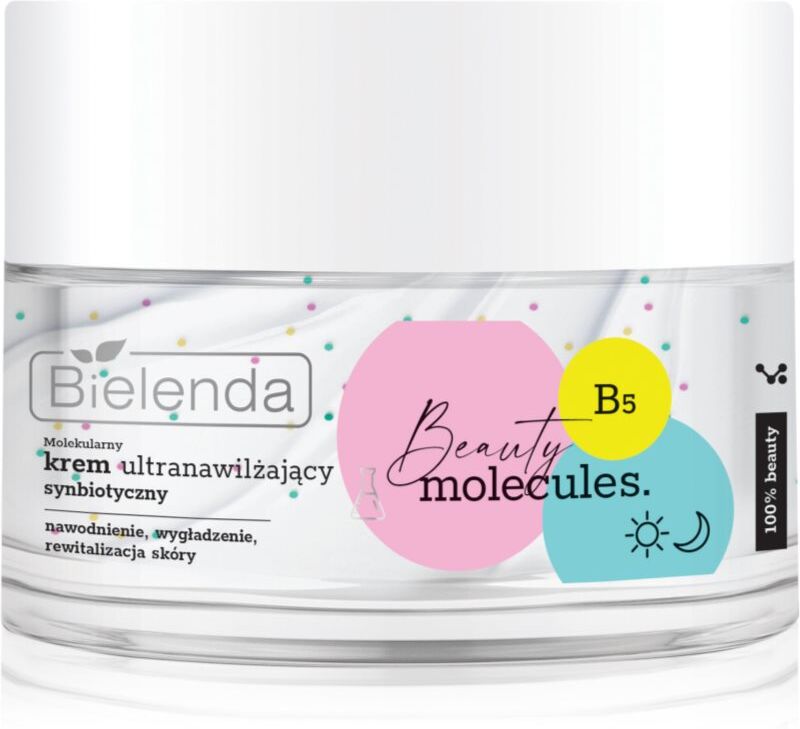
Bielenda Beauty Molecules smoothing moisturiser 50 mlBielenda Beauty Molecules, 50 ml, Moisturisers for Women, Don’t want to underestimate your skincare? Use a face cream every day – it’s a skincare staple that no beauty routine should do without, whatever your skin type and whatever your needs. The Bielenda Beauty Molecules face cream boosts the skin’s natural function, helps keep it balanced and sufficiently hydrated and contributes towards a healthier look overall. Characteristics: regenerates and vitalises moisturises intensely nourishes deeply soothes irritation and redness rejuvenates and energises the skin How to use: Apply to clean skin and massage in using circular movements. Apply to the face, neck and chest. Use every morning and/or evening.5,95 £*Shipping: 3,99 £Secure redirect to the provider
-
Bielenda Beauty Molecules moisturising cleansing gel 195 gBielenda Beauty Molecules, 195 g, Cleansing for Women, Before you start your regular skincare routine, it is very important to prepare your skin with a thorough cleansing - without it, the following beauty care routine would not be nearly as effective. The BielendaBeauty Molecules cleanser helps to remove all the impurities that have settled on the skin and in the pores throughout the day or overnight, leaving the skin perfectly clean and ready for any further skin treatments. Characteristics: washes the whole face gently and thoroughly hydrates deeply refreshes pleasantly How to use: Apply in the morning and/or evening to a damp face and lather. Then rinse off.5,36 £*Shipping: 3,99 £Secure redirect to the provider
-
Bielenda Beauty Molecules soothing and moisturising serum 30 gBielenda Beauty Molecules, 30 g, Skin Serums for Women, Does it feel as though your skin needs something more than just the care provided by a cream? The Bielenda Beauty Molecules facial serum is the perfect product to enrich your skincare routine – it pampers the skin and delivers an intensive treatment. With its high concentration of active ingredients, the effect it has on your skin is far more pronounced and faster than with a face cream. Its liquid consistency makes application easier, as it is absorbed into the skin very well. Characteristics: hydrates and nourishes effectively brightens restores skin elasticity restores freshness and youthful beauty to your skin Ingredients: contains a minimum of 90% ingredients of natural origin How to use: Dab an appropriate amount of the serum gently into clean skin with your fingertips. Apply to the face, neck and chest.5,95 £*Shipping: 3,99 £Secure redirect to the provider
-
Escentric Molecules Escentric 01 shower gel U 200 mlEscentric Molecules Escentric 01, 200 ml, Shower products unisex, Turn your daily shower or bath into a special experience you’ll be looking forward to all day. Escentric Molecules Escentric 01 body wash will delight your senses and make your skin smell wonderful. Characteristics: washes the skin and gets rid of dirt makes skin feel comfortable enhances the intensity of the fragrance from the same line pair with the fragrance for a wonderful gift36,12 £*Shipping: 3,99 £Secure redirect to the provider
-
'Salts or molecules?'
Salts are compounds formed from the reaction of an acid and a base, while molecules are made up of atoms bonded together. Salts are ionic compounds, meaning they are made up of ions, while molecules can be either ionic or covalent compounds. Salts have a specific crystalline structure and are often soluble in water, while molecules can have a wide range of physical properties and solubilities. Overall, salts and molecules are distinct types of chemical compounds with different structures and properties. **
-
Which of the following molecules are dipole molecules and why?
Molecules that have a dipole moment are considered dipole molecules. A dipole moment occurs when there is an uneven distribution of electron density within a molecule, resulting in a partial positive and partial negative charge. For example, molecules like water (H2O) and ammonia (NH3) are dipole molecules because of their polar covalent bonds, which create a separation of charge within the molecule. On the other hand, molecules like carbon dioxide (CO2) and methane (CH4) are nonpolar and do not have a dipole moment because the electronegativity of the atoms cancel each other out, resulting in a symmetrical distribution of charge. **
-
What is the difference between compound molecules and element molecules?
Compound molecules are made up of two or more different elements chemically bonded together, such as water (H2O) or carbon dioxide (CO2). Element molecules, on the other hand, are made up of two or more atoms of the same element bonded together, such as oxygen (O2) or nitrogen (N2). In compound molecules, the atoms are different, while in element molecules, the atoms are the same. **
-
Why do heptan-1-ol molecules and water molecules not mix?
Heptan-1-ol molecules and water molecules do not mix well because heptan-1-ol is a nonpolar molecule, while water is a polar molecule. Nonpolar molecules are not attracted to polar molecules, so they do not easily mix. Additionally, heptan-1-ol is hydrophobic, meaning it repels water, further preventing the two substances from mixing. This is due to the difference in the polarity and intermolecular forces between the two substances. **
Similar search terms for Molecules
-
J H Haynes & Co Ltd Haynes Property Manual 2 Books Collection Set (The Victorian House, Period Property)The Victorian House Manual The Victorian House Manual (2nd Edition): How They Were Built, Improvements & Refurbishment, Solutions to All Common Defects Thinking of buying a Victorian or Edwardian house? Or maybe you already own one? Either way, this clearly written manual explains all you need to know about the care and repair of these classic properties. Today, many houses of this age are in need of extensive updating and maintenance, having suffered years of neglect. Some have been damaged by misguided home improvements or botched repairs using the wrong materials. Even newly refurbished properties can sometimes conceal dangerous structural alterations and shoddy build-quality. This unique manual provides detailed, expert advice, backed up with clear how to colour photographs, describing where to check for the critical danger signs and how to fix all common defects. Period Property Britain has a wonderfully rich stock of period houses - everything from medieval cottages to Georgian townhouses and Edwardian mansions. But many of these historic properties are now at risk. Some are unwittingly damaged by well-meaning owners or incompetent builders; others suffer long-term deterioration where mortgage lenders have imposed quick-fix 'remedies'. Despite being some of the most sustainable buildings on the planet, many old houses are now being subjected to ill-advised works to upgrade thermal efficiency, resulting in the destruction of the very qualities that make them so appealing, slashing their values. Haynes have come to the rescue with this clearly written, lavishly illustrated manual explaining the correct approach to care and repair - covering the full range of traditional materials. Every old house has a story to tell, so Haynes also show how to explore your home's history and strip back modern finishes to reveal long lost original features. This comprehensive manual is essential reading whether you want to get your hands dirty or just want to understand how old houses work and how to go about employing specialist craftsmen.19,99 £*Shipping: 2,99 £Secure redirect to the provider
-
J H Haynes & Co Ltd Haynes Property Manual 3 Books Collection Set Home Extension The Victorian House Period PropertyTitles In this Set: The Victorian House Manual Home Extension Period Property The Victorian House Manual The Victorian House Manual (2nd Edition): How They Were Built, Improvements & Refurbishment, Solutions to All Common Defects Thinking of buying a Victorian or Edwardian house? Or maybe you already own one? Either way, this clearly written manual explains all you need to know about the care and repair of these classic properties. Today, many houses of this age are in need of extensive updating and maintenance, having suffered years of neglect. Some have been damaged by misguided home improvements or botched repairs using the wrong materials. Even newly refurbished properties can sometimes conceal dangerous structural alterations and shoddy build-quality. This unique manual provides detailed, expert advice, backed up with clear how to colour photographs, describing where to check for the critical danger signs and how to fix all common defects. Home ExtensionMany people are looking at ways to extend their homes rather than move house, but `getting the builders in' can be a recipe for disaster unless you really know what you are doing. Whether you plan to employ a building contractor or tackle some of the works yourself, this best-selling manual will show you how to stay firmly in control, resulting in a high-quality extension, completed on time and within budget. This new edition will include all the up-do-date information on complying with the latest Building Regs and Planning requirements, CAD design, energy-efficiency, under floor heating, bi-folds, liquid screeds, woodburning stoves and renewable energy. Period Property Britain has a wonderfully rich stock of period houses - everything from medieval cottages to Georgian townhouses and Edwardian mansions. But many of these historic properties are now at risk. Some are unwittingly damaged by well-meaning owners or incompetent builders; others suffer long-term deterioration where mortgage lenders have imposed quick-fix 'remedies'. Despite being some of the most sustainable buildings on the planet, many old houses are now being subjected to ill-advised works to upgrade thermal efficiency, resulting in the destruction of the very qualities that make them so appealing, slashing their values. Haynes have come to the rescue with this clearly written, lavishly illustrated manual explaining the correct approach to care and repair - covering the full range of traditional materials. Every old house has a story to tell, so Haynes also show how to explore your home's history and strip back modern finishes to reveal long lost original features. This comprehensive manual is essential reading whether you want to get your hands dirty or just want to understand how old houses work and how to go about employing specialist craftsmen.24,99 £*Shipping: 2,99 £Secure redirect to the provider
-
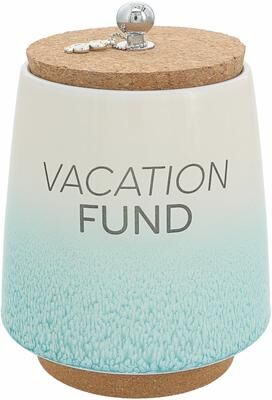
"Pavilion Vacation Fund Ceramic Savings Bank - 6.5"""Save for your next adventure in style with this charming “Vacation Fund” stoneware money jar. Featuring a glossy ombre glaze, motivational fill lines, and a removable dollar-sign keychain, it’s a fun and functional way to reach your travel goals31,99 $*Shipping: 0,00 $Secure redirect to the provider
-
Why are water molecules permanent dipoles and carbon dioxide molecules not?
Water molecules are permanent dipoles because they have a bent molecular shape with unequal sharing of electrons between the oxygen and hydrogen atoms. This results in a partial negative charge on the oxygen atom and partial positive charges on the hydrogen atoms, creating a permanent dipole moment. On the other hand, carbon dioxide molecules are not permanent dipoles because they have a linear molecular shape with symmetrical distribution of the two oxygen atoms and the carbon atom. This results in equal sharing of electrons and no permanent dipole moment. **
-
How are molecules recognized?
Molecules are recognized through specific interactions between their chemical structures and complementary binding sites on other molecules. This recognition process involves the formation of non-covalent bonds such as hydrogen bonds, van der Waals forces, and electrostatic interactions. The shape, size, and charge distribution of molecules play a crucial role in determining their recognition by other molecules. Additionally, specific functional groups and chemical properties can also contribute to the recognition process. **
-
How are molecules formed?
Molecules are formed through chemical bonding between atoms. Atoms can either share electrons to form covalent bonds or transfer electrons to form ionic bonds. The type of bonding that occurs depends on the elements involved and their tendency to gain, lose, or share electrons. Once atoms are bonded together, they form a stable structure known as a molecule. **
-
Search for dipole molecules.
Dipole molecules are molecules that have a separation of positive and negative charges within the molecule. This separation creates a dipole moment, which results in the molecule having a positive end and a negative end. Examples of dipole molecules include water (H2O), hydrogen chloride (HCl), and ammonia (NH3). These molecules are important in various chemical reactions and interactions due to their polar nature. **
* All prices are inclusive of VAT and, if applicable, plus shipping costs. The offer information is based on the details provided by the respective shop and is updated through automated processes. Real-time updates do not occur, so deviations can occur in individual cases. ** Note: Parts of this content were created by AI.