Buy daydreamvillas.eu ?
We are moving the project
daydreamvillas.eu .
Are you interested in purchasing the domain
daydreamvillas.eu ?
domain@kv-gmbh.de · 0541-91531010
Buy daydreamvillas.eu ?
What is the Kaaba?
The Kaaba is a cube-shaped building located in the center of the Great Mosque in Mecca, Saudi Arabia. It is considered the most sacred site in Islam and is the focal point of the Hajj pilgrimage. Muslims around the world face the Kaaba during their daily prayers. According to Islamic tradition, the Kaaba was built by the Prophet Ibrahim and his son Isma'il as a place of worship for the one true God. **
Who built the Kaaba?
The Kaaba was originally built by the Prophet Ibrahim (Abraham) and his son Isma'il (Ishmael) according to Islamic tradition. It is believed that they were instructed by God to construct the Kaaba as a place of worship. Over the centuries, the Kaaba has been rebuilt and renovated several times, with the most recent major reconstruction taking place in the 1990s. Today, the Kaaba is considered the holiest site in Islam and is the focal point of the annual Hajj pilgrimage. **
Similar search terms for Kaaba
Top-Angebote
Products related to Kaaba:
-
"Pavilion Vacation Fund Ceramic Savings Bank - 6.5"""Save for your next adventure in style with this charming “Vacation Fund” stoneware money jar. Featuring a glossy ombre glaze, motivational fill lines, and a removable dollar-sign keychain, it’s a fun and functional way to reach your travel goals31,99 $*Shipping: 0,00 $Secure redirect to the provider
-
SAFAVIEH Retreat Aoibheann Farmhouse RugThe Retreat Rug Collection presents versatile indoor/outdoor area rugs that effortlessly complement any living space. Delicate fringe details lend a relaxed coastal charm, while a neutral palette ensures seamless harmony with existing decor.121,49 $*Shipping: 0,00 $Secure redirect to the provider
-
SAFAVIEH Retreat Potitsa Farmhouse RugThe Retreat Rug Collection presents versatile indoor/outdoor area rugs that effortlessly complement any living space. Delicate fringe details lend a relaxed coastal charm, while a neutral palette ensures seamless harmony with existing decor.111,99 $*Shipping: 0,00 $Secure redirect to the provider




-
Why was the Kaaba built?
The Kaaba was built as a sacred sanctuary for the worship of one God by the Prophet Ibrahim (Abraham) and his son Isma'il (Ishmael) as a place for pilgrimage and prayer. It holds great significance in Islam as the holiest site in the religion and is considered the House of God. Muslims from around the world face towards the Kaaba during their daily prayers as a symbol of unity and devotion to Allah. **
-
How was the Kaaba built?
The Kaaba was originally built by the Prophet Ibrahim and his son Isma'il as a place of worship for one God. According to Islamic tradition, Ibrahim and Isma'il were instructed by God to build the Kaaba, and they constructed it using stone and mortar. The Kaaba has been rebuilt and renovated several times throughout history, with the most recent reconstruction taking place in the 1990s. Today, the Kaaba stands as the holiest site in Islam and is the focal point of the annual pilgrimage to Mecca, known as Hajj. **
-
How can one film the Kaaba?
Filming the Kaaba is a sensitive and highly regulated process. In order to film the Kaaba, one must obtain permission from the Saudi government and adhere to strict guidelines set by the authorities. This may include obtaining a special permit, following specific filming restrictions, and respecting the sanctity of the site. Additionally, filming the Kaaba during the Hajj pilgrimage or other religious events may have additional requirements and limitations. It is important to approach the process with respect and understanding of the religious significance of the Kaaba to Muslims. **
-
Did Abraham really build the Kaaba?
Abraham is considered a significant figure in the construction of the Kaaba, but it is not believed that he built it entirely on his own. According to Islamic tradition, Abraham, along with his son Ishmael, is believed to have rebuilt the Kaaba as a place of monotheistic worship. The original construction of the Kaaba is attributed to the Prophet Adam. The Kaaba has undergone several reconstructions and renovations throughout history, and its current form is the result of various renovations and expansions. Therefore, while Abraham is associated with the rebuilding of the Kaaba, it is not accurate to say that he built it entirely on his own. **


Does the Kaaba stone come from paradise?
The belief that the Kaaba stone comes from paradise is a part of Islamic tradition and is not scientifically proven. According to Islamic tradition, the Kaaba stone is believed to be a meteorite that was sent down to Earth by Allah. However, there is no concrete evidence to support this claim. The significance of the Kaaba stone lies in its role as the focal point of Islamic worship and pilgrimage, rather than its origin. **
What are hadiths about circumambulating the Kaaba?
Hadiths about circumambulating the Kaaba provide guidance and instructions on the proper way to perform the tawaf, which is the act of walking around the Kaaba seven times during the pilgrimage to Mecca. These hadiths often describe the Prophet Muhammad's own actions and words during tawaf, serving as a model for Muslims to follow. They also emphasize the spiritual significance of the tawaf and the importance of maintaining a state of humility and devotion while performing this act of worship. Additionally, hadiths may provide details on the specific prayers and supplications to be recited during tawaf. **
Top-Angebote
Products related to Kaaba:
-
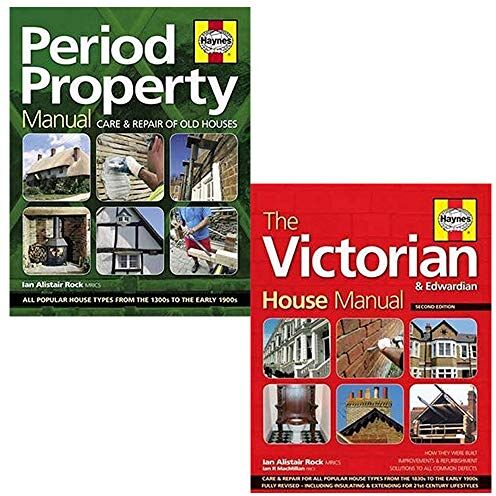
J H Haynes & Co Ltd Haynes Property Manual 2 Books Collection Set (The Victorian House, Period Property)The Victorian House Manual The Victorian House Manual (2nd Edition): How They Were Built, Improvements & Refurbishment, Solutions to All Common Defects Thinking of buying a Victorian or Edwardian house? Or maybe you already own one? Either way, this clearly written manual explains all you need to know about the care and repair of these classic properties. Today, many houses of this age are in need of extensive updating and maintenance, having suffered years of neglect. Some have been damaged by misguided home improvements or botched repairs using the wrong materials. Even newly refurbished properties can sometimes conceal dangerous structural alterations and shoddy build-quality. This unique manual provides detailed, expert advice, backed up with clear how to colour photographs, describing where to check for the critical danger signs and how to fix all common defects. Period Property Britain has a wonderfully rich stock of period houses - everything from medieval cottages to Georgian townhouses and Edwardian mansions. But many of these historic properties are now at risk. Some are unwittingly damaged by well-meaning owners or incompetent builders; others suffer long-term deterioration where mortgage lenders have imposed quick-fix 'remedies'. Despite being some of the most sustainable buildings on the planet, many old houses are now being subjected to ill-advised works to upgrade thermal efficiency, resulting in the destruction of the very qualities that make them so appealing, slashing their values. Haynes have come to the rescue with this clearly written, lavishly illustrated manual explaining the correct approach to care and repair - covering the full range of traditional materials. Every old house has a story to tell, so Haynes also show how to explore your home's history and strip back modern finishes to reveal long lost original features. This comprehensive manual is essential reading whether you want to get your hands dirty or just want to understand how old houses work and how to go about employing specialist craftsmen.19,99 £*Shipping: 2,99 £Secure redirect to the provider
-
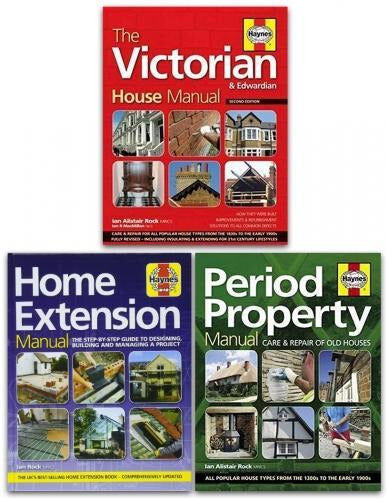
J H Haynes & Co Ltd Haynes Property Manual 3 Books Collection Set Home Extension The Victorian House Period PropertyTitles In this Set: The Victorian House Manual Home Extension Period Property The Victorian House Manual The Victorian House Manual (2nd Edition): How They Were Built, Improvements & Refurbishment, Solutions to All Common Defects Thinking of buying a Victorian or Edwardian house? Or maybe you already own one? Either way, this clearly written manual explains all you need to know about the care and repair of these classic properties. Today, many houses of this age are in need of extensive updating and maintenance, having suffered years of neglect. Some have been damaged by misguided home improvements or botched repairs using the wrong materials. Even newly refurbished properties can sometimes conceal dangerous structural alterations and shoddy build-quality. This unique manual provides detailed, expert advice, backed up with clear how to colour photographs, describing where to check for the critical danger signs and how to fix all common defects. Home ExtensionMany people are looking at ways to extend their homes rather than move house, but `getting the builders in' can be a recipe for disaster unless you really know what you are doing. Whether you plan to employ a building contractor or tackle some of the works yourself, this best-selling manual will show you how to stay firmly in control, resulting in a high-quality extension, completed on time and within budget. This new edition will include all the up-do-date information on complying with the latest Building Regs and Planning requirements, CAD design, energy-efficiency, under floor heating, bi-folds, liquid screeds, woodburning stoves and renewable energy. Period Property Britain has a wonderfully rich stock of period houses - everything from medieval cottages to Georgian townhouses and Edwardian mansions. But many of these historic properties are now at risk. Some are unwittingly damaged by well-meaning owners or incompetent builders; others suffer long-term deterioration where mortgage lenders have imposed quick-fix 'remedies'. Despite being some of the most sustainable buildings on the planet, many old houses are now being subjected to ill-advised works to upgrade thermal efficiency, resulting in the destruction of the very qualities that make them so appealing, slashing their values. Haynes have come to the rescue with this clearly written, lavishly illustrated manual explaining the correct approach to care and repair - covering the full range of traditional materials. Every old house has a story to tell, so Haynes also show how to explore your home's history and strip back modern finishes to reveal long lost original features. This comprehensive manual is essential reading whether you want to get your hands dirty or just want to understand how old houses work and how to go about employing specialist craftsmen.24,99 £*Shipping: 2,99 £Secure redirect to the provider
-
"Pavilion Vacation Fund Ceramic Savings Bank - 6.5"""Save for your next adventure in style with this charming “Vacation Fund” stoneware money jar. Featuring a glossy ombre glaze, motivational fill lines, and a removable dollar-sign keychain, it’s a fun and functional way to reach your travel goals31,99 $*Shipping: 0,00 $Secure redirect to the provider
-
What is the Kaaba?
The Kaaba is a cube-shaped building located in the center of the Great Mosque in Mecca, Saudi Arabia. It is considered the most sacred site in Islam and is the focal point of the Hajj pilgrimage. Muslims around the world face the Kaaba during their daily prayers. According to Islamic tradition, the Kaaba was built by the Prophet Ibrahim and his son Isma'il as a place of worship for the one true God. **
-
Who built the Kaaba?
The Kaaba was originally built by the Prophet Ibrahim (Abraham) and his son Isma'il (Ishmael) according to Islamic tradition. It is believed that they were instructed by God to construct the Kaaba as a place of worship. Over the centuries, the Kaaba has been rebuilt and renovated several times, with the most recent major reconstruction taking place in the 1990s. Today, the Kaaba is considered the holiest site in Islam and is the focal point of the annual Hajj pilgrimage. **
-
Why was the Kaaba built?
The Kaaba was built as a sacred sanctuary for the worship of one God by the Prophet Ibrahim (Abraham) and his son Isma'il (Ishmael) as a place for pilgrimage and prayer. It holds great significance in Islam as the holiest site in the religion and is considered the House of God. Muslims from around the world face towards the Kaaba during their daily prayers as a symbol of unity and devotion to Allah. **
-
How was the Kaaba built?
The Kaaba was originally built by the Prophet Ibrahim and his son Isma'il as a place of worship for one God. According to Islamic tradition, Ibrahim and Isma'il were instructed by God to build the Kaaba, and they constructed it using stone and mortar. The Kaaba has been rebuilt and renovated several times throughout history, with the most recent reconstruction taking place in the 1990s. Today, the Kaaba stands as the holiest site in Islam and is the focal point of the annual pilgrimage to Mecca, known as Hajj. **
Similar search terms for Kaaba
-
SAFAVIEH Retreat Aoibheann Farmhouse RugThe Retreat Rug Collection presents versatile indoor/outdoor area rugs that effortlessly complement any living space. Delicate fringe details lend a relaxed coastal charm, while a neutral palette ensures seamless harmony with existing decor.121,49 $*Shipping: 0,00 $Secure redirect to the provider
-
SAFAVIEH Retreat Potitsa Farmhouse RugThe Retreat Rug Collection presents versatile indoor/outdoor area rugs that effortlessly complement any living space. Delicate fringe details lend a relaxed coastal charm, while a neutral palette ensures seamless harmony with existing decor.111,99 $*Shipping: 0,00 $Secure redirect to the provider
-
SAFAVIEH Retreat Potitsa Farmhouse RugThe Retreat Rug Collection presents versatile indoor/outdoor area rugs that effortlessly complement any living space. Delicate fringe details lend a relaxed coastal charm, while a neutral palette ensures seamless harmony with existing decor.118,49 $*Shipping: 0,00 $Secure redirect to the provider
-
SAFAVIEH Retreat Gokben Farmhouse RugThe Retreat Rug Collection presents versatile indoor/outdoor area rugs that effortlessly complement any living space. Delicate fringe details lend a relaxed coastal charm, while a neutral palette ensures seamless harmony with existing decor.72,92 $*Shipping: 0,00 $Secure redirect to the provider
-
How can one film the Kaaba?
Filming the Kaaba is a sensitive and highly regulated process. In order to film the Kaaba, one must obtain permission from the Saudi government and adhere to strict guidelines set by the authorities. This may include obtaining a special permit, following specific filming restrictions, and respecting the sanctity of the site. Additionally, filming the Kaaba during the Hajj pilgrimage or other religious events may have additional requirements and limitations. It is important to approach the process with respect and understanding of the religious significance of the Kaaba to Muslims. **
-
Did Abraham really build the Kaaba?
Abraham is considered a significant figure in the construction of the Kaaba, but it is not believed that he built it entirely on his own. According to Islamic tradition, Abraham, along with his son Ishmael, is believed to have rebuilt the Kaaba as a place of monotheistic worship. The original construction of the Kaaba is attributed to the Prophet Adam. The Kaaba has undergone several reconstructions and renovations throughout history, and its current form is the result of various renovations and expansions. Therefore, while Abraham is associated with the rebuilding of the Kaaba, it is not accurate to say that he built it entirely on his own. **
-
Does the Kaaba stone come from paradise?
The belief that the Kaaba stone comes from paradise is a part of Islamic tradition and is not scientifically proven. According to Islamic tradition, the Kaaba stone is believed to be a meteorite that was sent down to Earth by Allah. However, there is no concrete evidence to support this claim. The significance of the Kaaba stone lies in its role as the focal point of Islamic worship and pilgrimage, rather than its origin. **
-
What are hadiths about circumambulating the Kaaba?
Hadiths about circumambulating the Kaaba provide guidance and instructions on the proper way to perform the tawaf, which is the act of walking around the Kaaba seven times during the pilgrimage to Mecca. These hadiths often describe the Prophet Muhammad's own actions and words during tawaf, serving as a model for Muslims to follow. They also emphasize the spiritual significance of the tawaf and the importance of maintaining a state of humility and devotion while performing this act of worship. Additionally, hadiths may provide details on the specific prayers and supplications to be recited during tawaf. **
* All prices are inclusive of VAT and, if applicable, plus shipping costs. The offer information is based on the details provided by the respective shop and is updated through automated processes. Real-time updates do not occur, so deviations can occur in individual cases. ** Note: Parts of this content were created by AI.