Buy daydreamvillas.eu ?
We are moving the project
daydreamvillas.eu .
Are you interested in purchasing the domain
daydreamvillas.eu ?
domain@kv-gmbh.de · 0541-91531010
Buy daydreamvillas.eu ?
What is static friction, kinetic friction, and rolling friction?
Static friction is the force that resists the initial motion of an object at rest. It is the friction force that must be overcome to start an object moving. Kinetic friction, on the other hand, is the force that opposes the motion of an object that is already in motion. Rolling friction is the force that resists the motion of a rolling object, such as a wheel or a ball, as it moves across a surface. It is generally lower than static and kinetic friction because the rolling motion reduces the amount of surface area in contact with the object, thus reducing the friction force. **
What are good examples of static friction, sliding friction, and rolling friction?
Good examples of static friction include a heavy box sitting on the floor that requires a lot of force to start moving, or a car tire on a road that is not moving. Sliding friction can be seen when you push a book across a table, or when you slide down a slide at the playground. Rolling friction is evident when a ball rolls across the ground, or when a car is in motion and its tires are rolling on the road. **
Similar search terms for Friction
Top-Angebote
Products related to Friction:
-
Uplifted Goods Invisible Anti Friction Thigh Patches For Comfort And Skin Protection 20 Boxes (200 Pcs)Say goodbye to thigh chafing with these invisible antifriction thigh patches. Designed to prevent irritation and rubbing, each breathable patch adheres comfortably to the skin, creating a protective barrier that keeps you confident and comfortable...199,97 $*Shipping: 0,00 $Secure redirect to the provider
-
J H Haynes & Co Ltd Haynes Property Manual 2 Books Collection Set (The Victorian House, Period Property)The Victorian House Manual The Victorian House Manual (2nd Edition): How They Were Built, Improvements & Refurbishment, Solutions to All Common Defects Thinking of buying a Victorian or Edwardian house? Or maybe you already own one? Either way, this clearly written manual explains all you need to know about the care and repair of these classic properties. Today, many houses of this age are in need of extensive updating and maintenance, having suffered years of neglect. Some have been damaged by misguided home improvements or botched repairs using the wrong materials. Even newly refurbished properties can sometimes conceal dangerous structural alterations and shoddy build-quality. This unique manual provides detailed, expert advice, backed up with clear how to colour photographs, describing where to check for the critical danger signs and how to fix all common defects. Period Property Britain has a wonderfully rich stock of period houses - everything from medieval cottages to Georgian townhouses and Edwardian mansions. But many of these historic properties are now at risk. Some are unwittingly damaged by well-meaning owners or incompetent builders; others suffer long-term deterioration where mortgage lenders have imposed quick-fix 'remedies'. Despite being some of the most sustainable buildings on the planet, many old houses are now being subjected to ill-advised works to upgrade thermal efficiency, resulting in the destruction of the very qualities that make them so appealing, slashing their values. Haynes have come to the rescue with this clearly written, lavishly illustrated manual explaining the correct approach to care and repair - covering the full range of traditional materials. Every old house has a story to tell, so Haynes also show how to explore your home's history and strip back modern finishes to reveal long lost original features. This comprehensive manual is essential reading whether you want to get your hands dirty or just want to understand how old houses work and how to go about employing specialist craftsmen.19,99 £*Shipping: 2,99 £Secure redirect to the provider
-
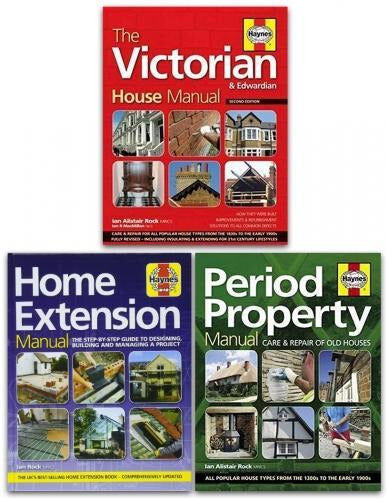
J H Haynes & Co Ltd Haynes Property Manual 3 Books Collection Set Home Extension The Victorian House Period PropertyTitles In this Set: The Victorian House Manual Home Extension Period Property The Victorian House Manual The Victorian House Manual (2nd Edition): How They Were Built, Improvements & Refurbishment, Solutions to All Common Defects Thinking of buying a Victorian or Edwardian house? Or maybe you already own one? Either way, this clearly written manual explains all you need to know about the care and repair of these classic properties. Today, many houses of this age are in need of extensive updating and maintenance, having suffered years of neglect. Some have been damaged by misguided home improvements or botched repairs using the wrong materials. Even newly refurbished properties can sometimes conceal dangerous structural alterations and shoddy build-quality. This unique manual provides detailed, expert advice, backed up with clear how to colour photographs, describing where to check for the critical danger signs and how to fix all common defects. Home ExtensionMany people are looking at ways to extend their homes rather than move house, but `getting the builders in' can be a recipe for disaster unless you really know what you are doing. Whether you plan to employ a building contractor or tackle some of the works yourself, this best-selling manual will show you how to stay firmly in control, resulting in a high-quality extension, completed on time and within budget. This new edition will include all the up-do-date information on complying with the latest Building Regs and Planning requirements, CAD design, energy-efficiency, under floor heating, bi-folds, liquid screeds, woodburning stoves and renewable energy. Period Property Britain has a wonderfully rich stock of period houses - everything from medieval cottages to Georgian townhouses and Edwardian mansions. But many of these historic properties are now at risk. Some are unwittingly damaged by well-meaning owners or incompetent builders; others suffer long-term deterioration where mortgage lenders have imposed quick-fix 'remedies'. Despite being some of the most sustainable buildings on the planet, many old houses are now being subjected to ill-advised works to upgrade thermal efficiency, resulting in the destruction of the very qualities that make them so appealing, slashing their values. Haynes have come to the rescue with this clearly written, lavishly illustrated manual explaining the correct approach to care and repair - covering the full range of traditional materials. Every old house has a story to tell, so Haynes also show how to explore your home's history and strip back modern finishes to reveal long lost original features. This comprehensive manual is essential reading whether you want to get your hands dirty or just want to understand how old houses work and how to go about employing specialist craftsmen.24,99 £*Shipping: 2,99 £Secure redirect to the provider
-
"Pavilion Vacation Fund Ceramic Savings Bank - 6.5"""Save for your next adventure in style with this charming “Vacation Fund” stoneware money jar. Featuring a glossy ombre glaze, motivational fill lines, and a removable dollar-sign keychain, it’s a fun and functional way to reach your travel goals31,99 $*Shipping: 0,00 $Secure redirect to the provider

-
What is static friction and kinetic friction?
Static friction is the force that resists the initial motion of an object at rest. It is the frictional force that must be overcome in order to start an object moving. Kinetic friction, on the other hand, is the force that resists the motion of an object already in motion. It is the frictional force that opposes the movement of an object as it slides or rolls over a surface. Both types of friction are caused by the interactions between the surfaces of the object and the surface it is in contact with. **
-
What is better: friction paste or friction spray?
The choice between friction paste and friction spray depends on personal preference and the specific application. Friction paste is typically more durable and longer-lasting, making it better for heavy-duty or long-term use. On the other hand, friction spray is easier to apply and can be more convenient for quick or temporary fixes. Ultimately, the best option will depend on the specific needs and preferences of the user. **
-
Why is static friction stronger than kinetic friction?
Static friction is stronger than kinetic friction because when an object is at rest, the microscopic rough surfaces of the two objects in contact have more time to interlock and create a stronger bond, requiring more force to overcome. Once the object starts moving, the surfaces are in motion and the interlocking is broken more easily, resulting in less resistance. This difference in interlocking and bonding between the surfaces is what causes static friction to be stronger than kinetic friction. **
-
Why is rolling friction smaller than sliding friction?
Rolling friction is smaller than sliding friction because when an object is rolling, only a small portion of its surface is in contact with the ground at any given time. This reduces the amount of friction generated compared to when an object is sliding, where the entire surface is in contact with the ground. Additionally, the rolling motion allows for smoother movement, resulting in less resistance and friction. Lastly, rolling friction also involves less deformation of the surfaces in contact, further reducing the frictional force. **


What is the difference between static friction, kinetic friction, and rolling friction in physics?
Static friction occurs when an object is at rest and is being acted upon by an external force. Kinetic friction, on the other hand, occurs when an object is in motion and is being acted upon by an external force. Rolling friction is the force that resists the motion of a rolling object, such as a wheel or a ball. The main difference between these types of friction is the state of motion of the object and the type of force being applied. **
What is the difference between sliding friction and static friction?
Sliding friction occurs when two surfaces are in motion relative to each other, while static friction occurs when two surfaces are at rest relative to each other. Sliding friction is generally weaker than static friction, as it only opposes the motion of the objects. Static friction, on the other hand, is stronger and prevents the objects from moving in the first place. **
Top-Angebote
Products related to Friction:
-
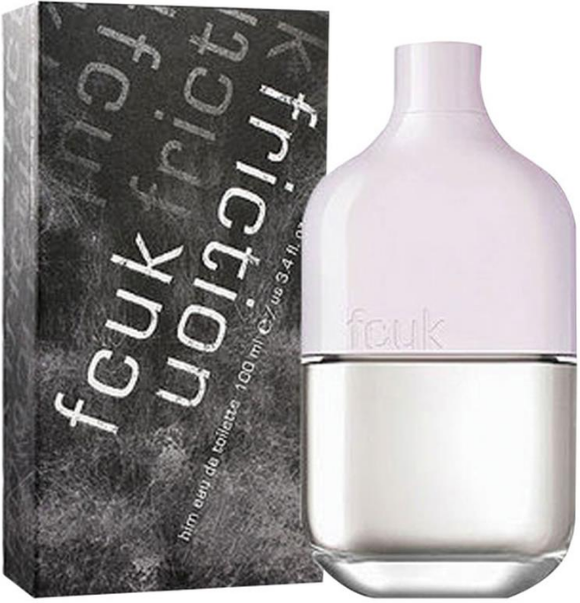
Fcuk Friction Men's 100ml Eau de Toilette Spray 100mlFCUK Friction Him Eau de Toilette 100ml Spray Friction by FCUK. This is a fresh fragrance for men. It contains of mandarin, green fruits, fresh lavender, black coconut, geranium, marine, cardamom, rum accord, sensual amber, leather, patchouli and musk. Size: 100ml10,50 £*Shipping: 3,99 £Secure redirect to the provider
-
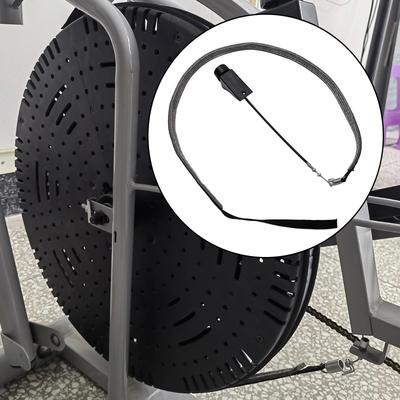
Smart Shopping Spot Exercise Bike Friction Belt Replacement Strap For Stationary Bike Resistance Systems Exercise Bike Friction Belt Replacement Strap For Stationary Bike Resistance SystemsBoost your indoor workouts by restoring smooth, consistent resistance with this stationary bike resistance belt. Designed for home fitness enthusiasts and gym owners alike, this 120cm replacement strap helps bring worn exercise bikes back to...34,97 $*Shipping: 0,00 $Secure redirect to the provider
-
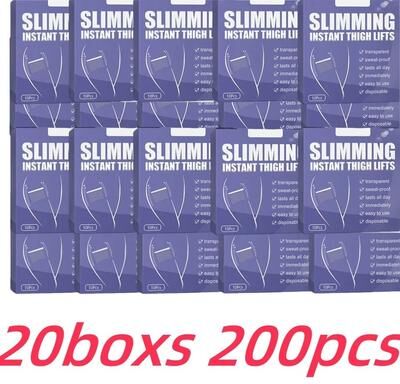
Uplifted Goods Invisible Anti Friction Thigh Patches For Comfort And Skin Protection 20 Boxes (200 Pcs)Say goodbye to thigh chafing with these invisible antifriction thigh patches. Designed to prevent irritation and rubbing, each breathable patch adheres comfortably to the skin, creating a protective barrier that keeps you confident and comfortable...199,97 $*Shipping: 0,00 $Secure redirect to the provider
-
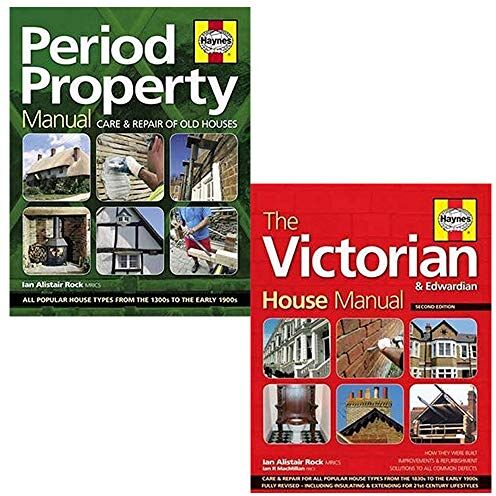
J H Haynes & Co Ltd Haynes Property Manual 2 Books Collection Set (The Victorian House, Period Property)The Victorian House Manual The Victorian House Manual (2nd Edition): How They Were Built, Improvements & Refurbishment, Solutions to All Common Defects Thinking of buying a Victorian or Edwardian house? Or maybe you already own one? Either way, this clearly written manual explains all you need to know about the care and repair of these classic properties. Today, many houses of this age are in need of extensive updating and maintenance, having suffered years of neglect. Some have been damaged by misguided home improvements or botched repairs using the wrong materials. Even newly refurbished properties can sometimes conceal dangerous structural alterations and shoddy build-quality. This unique manual provides detailed, expert advice, backed up with clear how to colour photographs, describing where to check for the critical danger signs and how to fix all common defects. Period Property Britain has a wonderfully rich stock of period houses - everything from medieval cottages to Georgian townhouses and Edwardian mansions. But many of these historic properties are now at risk. Some are unwittingly damaged by well-meaning owners or incompetent builders; others suffer long-term deterioration where mortgage lenders have imposed quick-fix 'remedies'. Despite being some of the most sustainable buildings on the planet, many old houses are now being subjected to ill-advised works to upgrade thermal efficiency, resulting in the destruction of the very qualities that make them so appealing, slashing their values. Haynes have come to the rescue with this clearly written, lavishly illustrated manual explaining the correct approach to care and repair - covering the full range of traditional materials. Every old house has a story to tell, so Haynes also show how to explore your home's history and strip back modern finishes to reveal long lost original features. This comprehensive manual is essential reading whether you want to get your hands dirty or just want to understand how old houses work and how to go about employing specialist craftsmen.19,99 £*Shipping: 2,99 £Secure redirect to the provider
-
What is static friction, kinetic friction, and rolling friction?
Static friction is the force that resists the initial motion of an object at rest. It is the friction force that must be overcome to start an object moving. Kinetic friction, on the other hand, is the force that opposes the motion of an object that is already in motion. Rolling friction is the force that resists the motion of a rolling object, such as a wheel or a ball, as it moves across a surface. It is generally lower than static and kinetic friction because the rolling motion reduces the amount of surface area in contact with the object, thus reducing the friction force. **
-
What are good examples of static friction, sliding friction, and rolling friction?
Good examples of static friction include a heavy box sitting on the floor that requires a lot of force to start moving, or a car tire on a road that is not moving. Sliding friction can be seen when you push a book across a table, or when you slide down a slide at the playground. Rolling friction is evident when a ball rolls across the ground, or when a car is in motion and its tires are rolling on the road. **
-
What is static friction and kinetic friction?
Static friction is the force that resists the initial motion of an object at rest. It is the frictional force that must be overcome in order to start an object moving. Kinetic friction, on the other hand, is the force that resists the motion of an object already in motion. It is the frictional force that opposes the movement of an object as it slides or rolls over a surface. Both types of friction are caused by the interactions between the surfaces of the object and the surface it is in contact with. **
-
What is better: friction paste or friction spray?
The choice between friction paste and friction spray depends on personal preference and the specific application. Friction paste is typically more durable and longer-lasting, making it better for heavy-duty or long-term use. On the other hand, friction spray is easier to apply and can be more convenient for quick or temporary fixes. Ultimately, the best option will depend on the specific needs and preferences of the user. **
Similar search terms for Friction
-
J H Haynes & Co Ltd Haynes Property Manual 3 Books Collection Set Home Extension The Victorian House Period PropertyTitles In this Set: The Victorian House Manual Home Extension Period Property The Victorian House Manual The Victorian House Manual (2nd Edition): How They Were Built, Improvements & Refurbishment, Solutions to All Common Defects Thinking of buying a Victorian or Edwardian house? Or maybe you already own one? Either way, this clearly written manual explains all you need to know about the care and repair of these classic properties. Today, many houses of this age are in need of extensive updating and maintenance, having suffered years of neglect. Some have been damaged by misguided home improvements or botched repairs using the wrong materials. Even newly refurbished properties can sometimes conceal dangerous structural alterations and shoddy build-quality. This unique manual provides detailed, expert advice, backed up with clear how to colour photographs, describing where to check for the critical danger signs and how to fix all common defects. Home ExtensionMany people are looking at ways to extend their homes rather than move house, but `getting the builders in' can be a recipe for disaster unless you really know what you are doing. Whether you plan to employ a building contractor or tackle some of the works yourself, this best-selling manual will show you how to stay firmly in control, resulting in a high-quality extension, completed on time and within budget. This new edition will include all the up-do-date information on complying with the latest Building Regs and Planning requirements, CAD design, energy-efficiency, under floor heating, bi-folds, liquid screeds, woodburning stoves and renewable energy. Period Property Britain has a wonderfully rich stock of period houses - everything from medieval cottages to Georgian townhouses and Edwardian mansions. But many of these historic properties are now at risk. Some are unwittingly damaged by well-meaning owners or incompetent builders; others suffer long-term deterioration where mortgage lenders have imposed quick-fix 'remedies'. Despite being some of the most sustainable buildings on the planet, many old houses are now being subjected to ill-advised works to upgrade thermal efficiency, resulting in the destruction of the very qualities that make them so appealing, slashing their values. Haynes have come to the rescue with this clearly written, lavishly illustrated manual explaining the correct approach to care and repair - covering the full range of traditional materials. Every old house has a story to tell, so Haynes also show how to explore your home's history and strip back modern finishes to reveal long lost original features. This comprehensive manual is essential reading whether you want to get your hands dirty or just want to understand how old houses work and how to go about employing specialist craftsmen.24,99 £*Shipping: 2,99 £Secure redirect to the provider
-
"Pavilion Vacation Fund Ceramic Savings Bank - 6.5"""Save for your next adventure in style with this charming “Vacation Fund” stoneware money jar. Featuring a glossy ombre glaze, motivational fill lines, and a removable dollar-sign keychain, it’s a fun and functional way to reach your travel goals31,99 $*Shipping: 0,00 $Secure redirect to the provider
-
Uplifted Goods Invisible Anti Friction Thigh Patches For Comfort And Skin Protection 1 Box (10 Pcs)Say goodbye to thigh chafing with these invisible antifriction thigh patches. Designed to prevent irritation and rubbing, each breathable patch adheres comfortably to the skin, creating a protective barrier that keeps you confident and comfortable...40,97 $*Shipping: 0,00 $Secure redirect to the provider
-
Why is static friction stronger than kinetic friction?
Static friction is stronger than kinetic friction because when an object is at rest, the microscopic rough surfaces of the two objects in contact have more time to interlock and create a stronger bond, requiring more force to overcome. Once the object starts moving, the surfaces are in motion and the interlocking is broken more easily, resulting in less resistance. This difference in interlocking and bonding between the surfaces is what causes static friction to be stronger than kinetic friction. **
-
Why is rolling friction smaller than sliding friction?
Rolling friction is smaller than sliding friction because when an object is rolling, only a small portion of its surface is in contact with the ground at any given time. This reduces the amount of friction generated compared to when an object is sliding, where the entire surface is in contact with the ground. Additionally, the rolling motion allows for smoother movement, resulting in less resistance and friction. Lastly, rolling friction also involves less deformation of the surfaces in contact, further reducing the frictional force. **
-
What is the difference between static friction, kinetic friction, and rolling friction in physics?
Static friction occurs when an object is at rest and is being acted upon by an external force. Kinetic friction, on the other hand, occurs when an object is in motion and is being acted upon by an external force. Rolling friction is the force that resists the motion of a rolling object, such as a wheel or a ball. The main difference between these types of friction is the state of motion of the object and the type of force being applied. **
-
What is the difference between sliding friction and static friction?
Sliding friction occurs when two surfaces are in motion relative to each other, while static friction occurs when two surfaces are at rest relative to each other. Sliding friction is generally weaker than static friction, as it only opposes the motion of the objects. Static friction, on the other hand, is stronger and prevents the objects from moving in the first place. **
* All prices are inclusive of VAT and, if applicable, plus shipping costs. The offer information is based on the details provided by the respective shop and is updated through automated processes. Real-time updates do not occur, so deviations can occur in individual cases. ** Note: Parts of this content were created by AI.